CBD and Drug Interactions: What You Need to Know
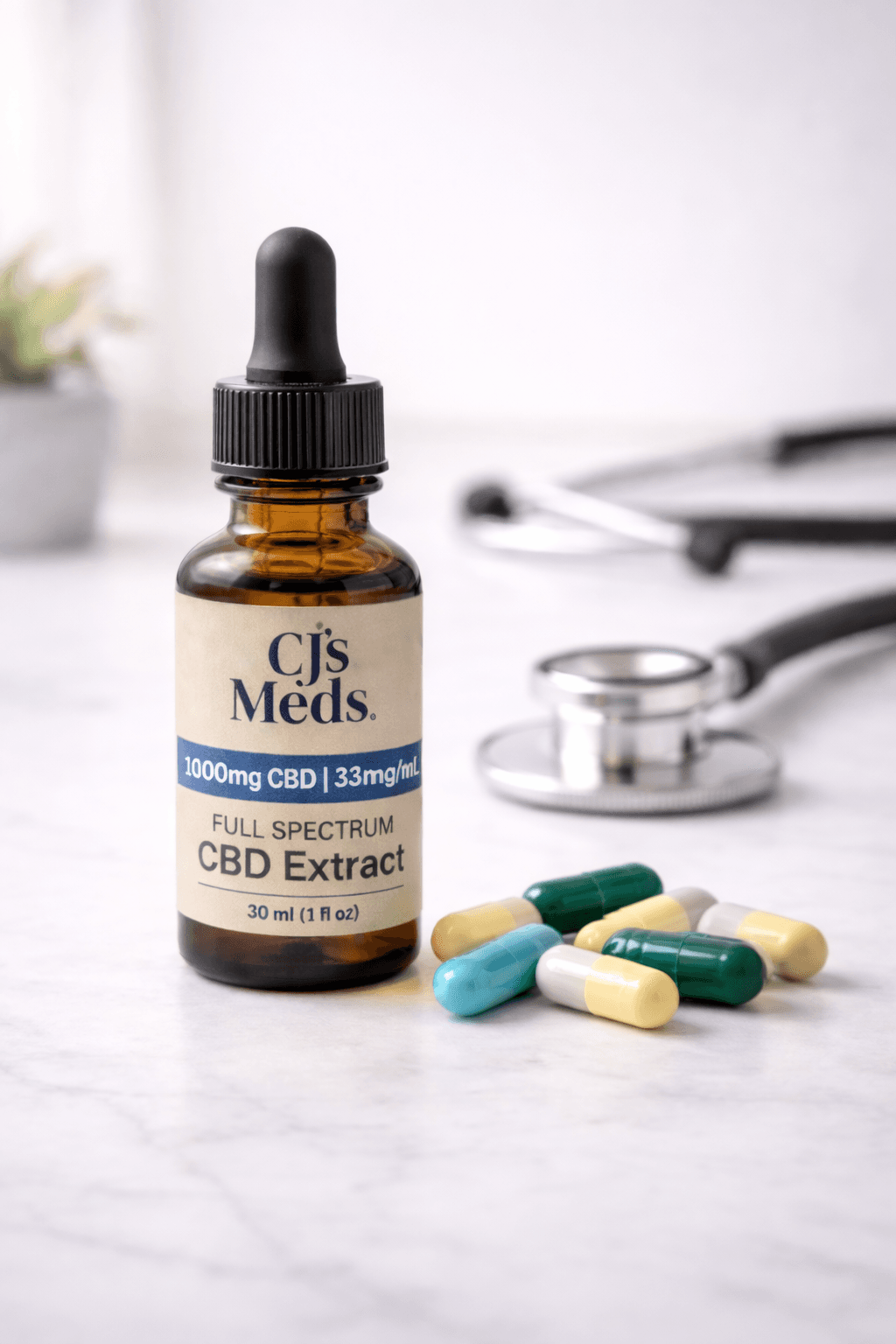
CBD is generally well tolerated and has a strong safety profile, but it can interact with certain medications. If you take prescription drugs, understanding these interactions is essential before adding CBD to your routine.
The Cytochrome P450 System
To understand CBD drug interactions, you need to understand how your body metabolizes drugs. The liver contains a family of enzymes called cytochrome P450 (CYP450) that are responsible for breaking down approximately 60% of all medications on the market.
CBD inhibits several key CYP450 enzymes, including:
- CYP3A4: Metabolizes about 50% of all pharmaceutical drugs
- CYP2C19: Metabolizes certain antidepressants, proton pump inhibitors, and anti-seizure drugs
- CYP2C9: Metabolizes warfarin, certain NSAIDs, and some diabetes medications
- CYP2D6: Metabolizes many antidepressants, antipsychotics, and opioids
- CYP1A2: Metabolizes caffeine, melatonin, and some antipsychotics
When CBD inhibits these enzymes, medications that rely on them for metabolism may build up to higher levels in your bloodstream than intended. This can increase both the effects and side effects of those medications.
The Grapefruit Rule
A simple way to identify potential interactions: if your medication has a grapefruit warning on the label, it likely interacts with CBD. Both grapefruit and CBD inhibit CYP3A4 in similar ways.
Medications with grapefruit warnings include many:
- Statins (cholesterol drugs)
- Blood pressure medications (calcium channel blockers)
- Certain immunosuppressants
- Some anti-anxiety medications (benzodiazepines)
- Certain antihistamines
- Some heart rhythm medications
- Certain corticosteroids
Specific Drug Categories and Interactions
Blood Thinners (Warfarin/Coumadin)
Risk level: High. CBD inhibits CYP2C9, which metabolizes warfarin. This can cause warfarin levels to increase, raising the risk of bleeding. If you take warfarin, do NOT start CBD without your doctor's supervision. Your INR (international normalized ratio) will need to be monitored closely if you add CBD.
Anti-Seizure Medications
Risk level: Moderate to high. This interaction is well-documented because Epidiolex (pharmaceutical CBD) is prescribed alongside anti-seizure drugs. CBD can increase levels of clobazam and its active metabolite. It can also affect valproic acid levels, potentially increasing the risk of liver injury. Dose adjustments are often needed.
Benzodiazepines (Anxiety Medications)
Risk level: Moderate. CBD may increase blood levels of alprazolam (Xanax), diazepam (Valium), and similar drugs. This can increase sedation and impair motor function. If combining, start with very low CBD doses and monitor for increased drowsiness.
Antidepressants
Risk level: Low to moderate. SSRIs like sertraline (Zoloft) and fluoxetine (Prozac) are metabolized by CYP2D6 and CYP2C19. CBD inhibition could modestly increase their levels. Some people report positive synergy, but dose awareness is important.
Blood Pressure Medications
Risk level: Low to moderate. CBD itself can lower blood pressure slightly. Combined with antihypertensive drugs, this could cause blood pressure to drop too low (hypotension), causing dizziness or lightheadedness.
Opioid Pain Medications
Risk level: Moderate. CBD inhibits CYP2D6, which metabolizes codeine into its active form (morphine). This could reduce codeine's effectiveness. Conversely, CBD may increase levels of other opioids like oxycodone. Some research suggests CBD may help reduce opioid dependence, but this should only be explored under medical supervision.
Statins (Cholesterol Drugs)
Risk level: Low to moderate. Atorvastatin (Lipitor) and simvastatin are metabolized by CYP3A4. CBD could increase statin levels, potentially increasing the risk of side effects like muscle pain (myalgia). Pravastatin and rosuvastatin are less affected as they are not primarily CYP3A4-dependent.
Diabetes Medications
Risk level: Low to moderate. Some oral diabetes drugs are metabolized by CYP2C9. CBD could alter their blood levels. Additionally, CBD may affect blood sugar levels independently, requiring monitoring.
Immunosuppressants
Risk level: High. Drugs like tacrolimus and cyclosporine (used after organ transplants) have narrow therapeutic windows and are metabolized by CYP3A4. Even small changes in blood levels can be dangerous. Do NOT combine without transplant team approval.
Over-the-Counter Medications
Risk level: Generally low. Common OTC drugs to be aware of:
- NSAIDs (ibuprofen, naproxen): Minor interaction via CYP2C9. Generally safe at normal doses.
- Acetaminophen (Tylenol): Both CBD and acetaminophen are processed by the liver. Heavy use of both may increase liver strain.
- Antihistamines: Some are CYP3A4 substrates. May increase drowsiness.
Timing Matters
If your doctor approves combining CBD with a medication, timing can minimize interactions:
- Separate by 2 to 4 hours: Taking CBD and medications at different times gives your liver time to process each separately
- Consistent timing: Take CBD at the same time daily so blood levels are predictable
- Start low: Begin with the lowest effective CBD dose and increase slowly
Dose-Dependent Risk
Drug interactions are dose-dependent. At low CBD doses (10 to 25mg per day), interactions are generally minimal for most medications. The risk increases significantly at higher doses (over 100mg per day). The FDA-approved dose of Epidiolex for seizures is 5 to 20mg per kilogram of body weight per day, which is much higher than typical consumer CBD doses.
When to Talk to Your Doctor
Talk to your healthcare provider before using CBD if you:
- Take ANY prescription medication
- Take blood thinners of any kind
- Have liver disease or elevated liver enzymes
- Take anti-seizure medications
- Are on immunosuppressants
- Take medications with a narrow therapeutic index (small difference between effective and toxic dose)
- Are pregnant or breastfeeding
- Are preparing for surgery (CBD may affect anesthesia metabolism)
How to Have the Conversation
Many doctors are not yet familiar with CBD interactions. Here is how to have a productive conversation:
- Bring a list of all your current medications
- Mention the specific CBD product and dose you are considering
- Ask specifically about CYP450 interactions
- Request liver function monitoring if starting CBD alongside multiple medications
- Ask about appropriate timing to separate doses
Key Takeaways
- CBD inhibits liver enzymes (CYP450) that metabolize many common drugs
- The "grapefruit rule" is a quick way to identify potential interactions
- Blood thinners, seizure drugs, and immunosuppressants carry the highest interaction risk
- Low CBD doses (under 25mg) carry lower risk than high doses
- Always consult your healthcare provider before combining CBD with any prescription medication
- Timing and dose management can minimize interaction risks
Starting Low
If your doctor clears you to try CBD, starting low and slow is the safest way to begin. Our full spectrum CBD tinctures allow for precise dose adjustment by dropper, which makes it easier to find your minimum effective dose. Browse the tincture lineup for a range of potencies.
This article is for educational purposes only and is not medical advice. Always consult your healthcare provider before starting CBD, especially if you take prescription medications.