
What Is Kava? The Complete Guide to Kava Seltzers, Effects, and Safety
Quick Summary
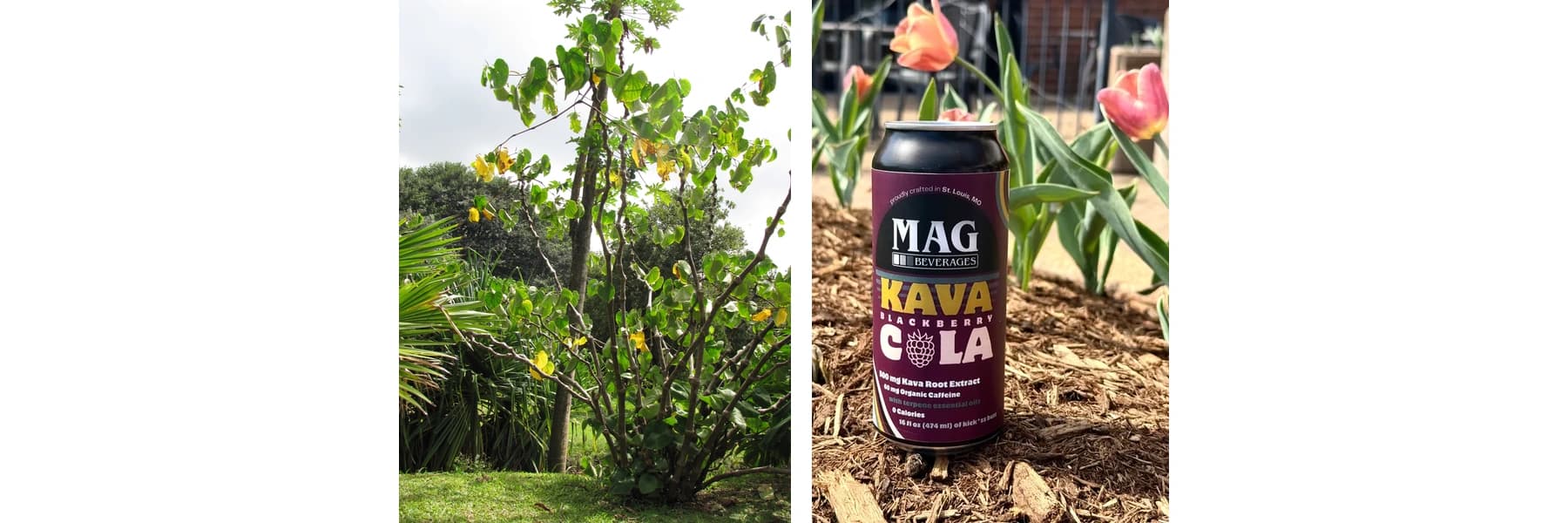
Kava (Piper methysticum) is a plant from the South Pacific whose active compounds, kavalactones, promote relaxation and sociability without cognitive impairment or hangover. It has been used ceremonially for over 3,000 years across Fiji, Tonga, Vanuatu, and Hawaii. Modern kava seltzers put a standardized dose (typically 500mg root extract with 150mg kavalactones per can) into a flavored carbonated beverage, making kava accessible to people who would never drink traditional ground root water. Kava is not cannabis, not CBD, not THC, and not kratom. It is a separate plant with a separate mechanism (GABA modulation) and a separate safety profile.
7 Things to Know About Kava Before Your First Sip
- Kava is a 3,000 year old ceremonial drink from the South Pacific, not a new trend
- The active compounds (kavalactones) work on your brain's GABA system to produce calm without cognitive impairment
- You will feel a lip and tongue tingle within 15 minutes. This is normal and means the kava is working
- Effects last 2 to 4 hours: calm, social looseness, muscle relaxation, clear head
- Zero hangover. Zero addiction risk. The MAG kava cans we carry are functional non alcoholic beverages built around noble kava and adaptogens
- The 2002 European liver scare was linked to poor quality products using non root parts and chemical solvents. Noble kava root extract (what reputable brands like MAG use) has been consumed safely for millennia
- Do not mix kava with alcohol. Both affect the GABA system. Pick one for the evening
If you've been paying attention to what's happening in the beverage world, you've probably seen kava popping up everywhere. Kava bars are opening across the country. Canned kava seltzers are showing up next to THC drinks on shelves. And a lot of people who used to reach for a beer or a cocktail at the end of the day are reaching for kava instead.
But most people don't actually know what kava is. They've heard the word, maybe seen a can with a cool design, and thought "I'll try that sometime." This guide is for those people. We're going to cover what kava actually is, how it works in your body, what it feels like, what the real safety data says, and why kava seltzers are becoming one of the fastest growing categories in functional beverages.
No hype. No medical claims. Just the facts so you can decide for yourself.
What Is Kava?
Kava (Piper methysticum) is a plant native to the South Pacific islands. The name literally translates to "intoxicating pepper" in Tongan. For over 3,000 years, communities in Fiji, Tonga, Vanuatu, Samoa, Hawaii, and throughout Polynesia and Melanesia have used kava as a ceremonial and social drink.
Traditional kava is made by grinding the root of the kava plant into a powder, mixing it with water, straining it, and drinking the resulting liquid. It tastes earthy, peppery, and honestly pretty rough if you're not used to it. The experience around drinking it is deeply social. In the Pacific Islands, kava ceremonies bring communities together the way wine or beer does in Western culture, except without the aggression, impairment, or hangovers that come with alcohol.
The active compounds in kava are called kavalactones. There are six primary kavalactones, each with slightly different effects, and the specific blend of these compounds varies between kava varieties (called cultivars). The total kavalactone content and the ratio between them determines the character of the experience: some cultivars are more relaxing, some are more social, some are more euphoric.
The History of Kava: 3,000 Years in 5 Minutes
The story of kava starts in what is now Vanuatu, a chain of islands in the western Pacific, where the plant was first domesticated roughly 3,000 years ago. From there, Polynesian and Melanesian voyagers carried kava root across the ocean as they settled new islands. By the time European explorers arrived in the 1700s, kava was established across Fiji, Tonga, Samoa, Hawaii, Papua New Guinea, and dozens of smaller island nations.
In every culture that adopted it, kava played the same role: it was the drink of peace, diplomacy, and community. Fijian chiefs served kava (called yaqona) when resolving disputes between villages. Tongan kings drank kava before making major decisions. Hawaiian kahuna (priests) used it in healing ceremonies. The drink was never about getting wrecked. It was about coming together with a clear head and open heart.
Captain James Cook documented kava ceremonies during his voyages in the 1770s, noting that Pacific Islanders drank it communally and that it produced "a pleasant state of relaxation" without the belligerence he associated with alcohol. He also noted that experienced kava drinkers showed no signs of dependency or health decline, an observation that 250 years of subsequent research has largely confirmed.
The kava plant itself is a member of the pepper family (Piperaceae), related to black pepper. It grows as a shrub up to about 6 feet tall in tropical climates. Only the root and rhizome (underground stem) are used for consumption. The plant takes 4 to 5 years to mature before it can be harvested, which is one reason kava has always been relatively expensive compared to other botanical products. You cannot rush a kava plant.
European and American interest in kava grew slowly through the 19th and 20th centuries, mostly in academic circles studying its pharmacology. The real mainstream breakout came in the 2010s when the sober curious movement created demand for alcohol alternatives that actually delivered a noticeable effect. Kava bars started opening in Florida, then spread to Texas, California, Colorado, and the Northeast. By 2025, there were hundreds of kava bars across the United States, and the canned kava seltzer category was born to bring the bar experience home.
How Do Kavalactones Work?
Kavalactones interact with your brain's GABA system. GABA (gamma aminobutyric acid) is the main neurotransmitter responsible for calming nerve activity. When GABA receptors are activated, you feel less anxious, your muscles relax, and your nervous system downshifts from "fight or flight" to "rest and digest."
If that sounds familiar, it's because alcohol also interacts with the GABA system. So do benzodiazepines (like Xanax). But here's the critical difference: kava modulates GABA activity without the same level of cognitive impairment, dependency risk, or neurotoxicity that comes with alcohol or pharmaceuticals. Multiple clinical studies, including a randomized controlled trial published in the Journal of Clinical Psychopharmacology, have demonstrated that kava extract can reduce anxiety symptoms comparably to some prescription medications without the same side effect profile.
In plain English: kava calms you down and loosens you up, but your brain keeps working. You don't slur your words. You don't make decisions you regret. You don't wake up the next morning feeling like something hit you with a truck.
The standard clinical dose studied in research is roughly 120 to 240 milligrams of kavalactones per day. A typical kava seltzer contains 400 to 500mg of kava root extract standardized to a known kavalactone percentage, which usually works out to roughly 100 to 150mg of kavalactones per can. That puts a single can right in the middle of the studied effective range. Check the can or the brand site for exact figures.
The 6 Kavalactones and What Each One Does
Not all kavalactones are the same. The six primary kavalactones in kava root each contribute something different to the experience. The ratio between them is what makes one kava variety feel different from another.
1. Kavain is the most studied kavalactone and the primary driver of kava's mood elevating and anxiolytic (anxiety reducing) effects. It promotes a sense of well being and mental clarity. Kavain is the reason kava makes you feel good without feeling impaired.
2. Dihydrokavain is closely related to kavain but with a stronger muscle relaxant effect. This is the kavalactone responsible for the physical looseness you feel, the "shoulders dropping" sensation. It also contributes to the mild sedation at higher doses.
3. Methysticin promotes calm and has demonstrated neuroprotective properties in research settings. It's a quieter kavalactone, working in the background to smooth out the experience rather than driving any single effect.
4. Dihydromethysticin is the most sedating of the six kavalactones. Varieties with high concentrations of this compound tend to produce heavier, sleepier effects. Tudei kava (the "bad" kava, discussed below) is high in this kavalactone, which is why it causes prolonged drowsiness.
5. Yangonin interacts with cannabinoid receptors (the same system THC activates) and may contribute to kava's subtle euphoric quality. Research on yangonin is still early, but it may partly explain why some kava drinkers describe a "warm glow" that feels different from pure GABA relaxation.
6. Desmethoxyyangonin is the least studied of the six but appears to contribute to mood elevation, potentially through interactions with dopamine and serotonin pathways.
The specific ratio of these six compounds is called the kava's "chemotype." Every kava cultivar has a different chemotype, which is why different kavas feel different. Reputable brands like MAG use standardized extracts that target a specific kavalactone concentration, ensuring consistent effects from can to can.
What Does Kava Actually Feel Like?
This is the question everyone wants answered, and most kava content online dances around it. Here's what most people report:
The first 15 to 30 minutes: You'll notice your lips and tongue feel slightly numb or tingly. This is normal and is actually one of the hallmarks of quality kava. The kavalactones have a mild anesthetic effect on the mucous membranes they touch. If you don't feel the tingle, the kava may be underdosed.
After 30 minutes: A wave of calm settles in. Not drowsiness, not spaciness, just calm. Your shoulders drop. Your jaw unclenches. The mental chatter that was running in the background quiets down. Many people describe it as "the feeling of finally sitting down after a long day on your feet."
The social effect: This is where kava really differentiates itself. Alcohol makes you louder, bolder, and less inhibited. Kava makes you warmer, more present, and more genuinely interested in the person you're talking to. People at kava bars describe conversations as feeling "more real" than at regular bars. You're relaxed but engaged, not sloppy.
The body feel: Mild muscle relaxation. Not heavy or sedating, just a looseness in your body that makes everything feel a little easier. Some people compare it to the feeling after a good massage or a long hot shower.
Duration: Effects typically last 2 to 4 hours, depending on the dose and your body chemistry.
The morning after: Nothing. No hangover. No brain fog. No regret. This is probably the single biggest selling point for people who are used to alcohol. You get the social and relaxation benefits without paying for it the next day.
Kava and Anxiety: What the Research Actually Says
The most common reason people try kava for the first time is anxiety. And unlike a lot of natural supplements where the evidence is thin, kava actually has real clinical data behind it.
The most cited study is the Sarris et al. randomized controlled trial published in the Journal of Clinical Psychopharmacology in 2013. Researchers gave participants with diagnosed Generalized Anxiety Disorder (GAD) either a standardized kava extract (120mg kavalactones, taken twice daily for 240mg total per day) or a placebo for 6 weeks. The kava group showed significant reduction in anxiety scores compared to placebo. The effect size was comparable to some first line pharmaceutical treatments for anxiety.
A Cochrane systematic review (the gold standard of medical evidence reviews) examined 12 randomized controlled trials involving a total of 700 participants. The reviewers concluded that kava extract was "likely to be more effective than placebo for treating short term anxiety" and that the effect was "significant and not trivial."
The Health.mil (U.S. Department of Defense health resource) published a 2023 summary noting that kava has "anxiolytic effects" supported by multiple clinical trials and that it works through GABA receptor modulation, similar in mechanism to benzodiazepines but without the same dependency profile.
What this means for you: The research supports what Pacific Islanders have known for 3,000 years: kava reduces anxiety. But we are legally required to tell you that these statements have not been evaluated by the FDA and kava is not intended to diagnose, treat, cure, or prevent any disease. If you have a clinical anxiety disorder, work with your healthcare provider. Kava is a dietary supplement, not a prescription medication, and it should not replace professional medical treatment.
That said, if you're a generally healthy person who feels stressed at the end of a long day and wants something to take the edge off without alcohol, the evidence for kava is stronger than for almost any other natural supplement in this space.
Kava and Sleep
Kava is not a sleep supplement. It's not melatonin, it's not valerian, and it's not going to knock you out. But a lot of people find that kava improves their sleep indirectly, and understanding why helps you use it better.
The mechanism is straightforward: kava reduces anxiety and relaxes muscles, both of which are common barriers to falling asleep. If you lie in bed with your mind racing and your shoulders tight, kava addresses both of those problems without the grogginess or dependency that comes with pharmaceutical sleep aids.
Research supports this. A 2004 study published in Psychopharmacology found that kava extract improved sleep quality in participants with stress induced insomnia. The improvement was attributed to kava's anxiolytic effects rather than a direct sedative mechanism. In other words, kava didn't put them to sleep. It removed the thing that was keeping them awake.
How people actually use kava for sleep: One can of kava seltzer about 60 to 90 minutes before bed. Not right before, because the initial onset includes a mild alertness (your brain is actively responding to the kavalactones) that transitions into deep relaxation after 30 to 45 minutes. The timing matters. Too close to bed and you might feel more awake during the onset phase.
Kava vs. melatonin: Melatonin signals your brain that it's time to sleep. Kava doesn't do that. Kava removes the barriers to sleep (anxiety, muscle tension, mental chatter). They address different problems. Some people use both: kava an hour before bed for the calm down, melatonin 30 minutes before bed for the sleep signal.
Kava vs. CBD for sleep: CBD is milder and can be used closer to bedtime without the onset alertness issue. Kava is stronger but needs the timing window. For chronic sleep issues, many people in our customer community use CBD nightly and add kava on particularly stressful days.
The key point: don't buy kava expecting it to be a sleeping pill. Buy it expecting it to quiet the noise that keeps you awake. The sleep improvement is a downstream effect, not the primary one.
How Is Kava Different from THC, CBD, and Alcohol?
We carry kava, THC, and CBD products in our shop, so let's be straight about how they all compare to alcohol.
Kava vs. Alcohol vs. THC vs. CBD: The Comparison
Mechanism of action: Kava modulates GABA receptors. Alcohol suppresses GABA broadly. THC activates the endocannabinoid system. CBD modulates serotonin and vanilloid receptors.
Onset time: Kava 15 to 30 minutes. Alcohol 10 to 15 minutes. THC (beverage) 15 to 45 minutes. CBD 30 to 60 minutes.
Duration: Kava 2 to 4 hours. Alcohol varies by consumption. THC 2 to 6 hours. CBD 4 to 6 hours.
Cognitive impairment: Kava none at normal doses. Alcohol significant. THC moderate (altered perception). CBD none.
Hangover: Kava none. Alcohol yes. THC mild (grogginess possible). CBD none.
Addiction risk: Kava no physical dependence. Alcohol high. THC moderate (psychological). CBD none.
Calories per serving: Kava roughly 15 to 90 per can depending on the brand and format. Alcohol 100 to 200+ per drink. THC seltzer 0 to 20. CBD 0 to 15. Check the label.
Legal status: Kava legal everywhere in the US, dietary supplement. Alcohol legal 21+. THC varies by state (hemp derived legal federally). CBD legal federally.
Best for: Kava is ideal for social relaxation without impairment. Alcohol is the cultural default but carries the most health risk. THC is ideal for people who enjoy altered perception. CBD is ideal for subtle daily calm.
Kava vs. Alcohol in More Detail
Both target the GABA system, but alcohol is a blunt instrument that suppresses brain function broadly. Kava is more selective. You get relaxation and social ease without cognitive impairment, and without the calories, liver inflammation, sleep disruption, or dependency that come with regular alcohol use. Zero hangover, far fewer empty calories than a typical cocktail.
Kava vs. THC in More Detail
Different mechanisms entirely. THC works through the endocannabinoid system. Kava works through the GABA system. THC changes perception and cognition (that's the "high"). Kava doesn't alter perception at all. You feel calm and relaxed, but reality stays exactly where it was. For people who like the social and relaxation aspects of THC but don't want the cognitive shift, kava fills that gap perfectly.
Kava vs. CBD in More Detail
CBD is subtle. Most people describe its effects as "I don't feel different, but I'm less anxious." Kava is more noticeable. You'll feel the onset, the tingle, the wave of calm. If CBD is a whisper, kava is a clear statement. They're also not mutually exclusive. Some people use CBD during the day for baseline calm and kava in the evening when they want something more tangible.
Is Kava Safe?
This is the most important section in this guide, and we're going to be honest about it because your health matters more than a sale.
The 2002 liver scare: In the early 2000s, several cases of liver damage in Europe were linked to kava products. This led to bans in Germany, the UK, and several other countries. It was a serious situation and it's the reason kava still carries a stigma in some circles.
What the follow up research found: The cases were overwhelmingly linked to products that used non-root parts of the kava plant (stems, leaves, bark) or that used chemical solvents (ethanol, acetone) for extraction instead of water. Traditional kava made from root only, prepared with water, has been consumed safely for millennia. A comprehensive review published in the International Journal of Molecular Sciences found that most adverse liver events were associated with poor quality products, pre-existing liver conditions, or concurrent use of alcohol and other hepatotoxic substances.
Noble kava vs. Tudei kava: This distinction matters. Noble kava varieties are the ones that Pacific Island communities have used ceremonially for thousands of years. They're selected for their balanced kavalactone profiles and pleasant effects. Tudei (or "two day") kava varieties grow faster and produce more kavalactones, but they have a very different chemical profile. Tudei kava is high in a kavalactone called DHM that causes nausea, lethargy, and prolonged drowsiness. Reputable kava products use only noble kava root extract. The MAG kava products we carry use noble kava root extract, which is the right approach.
How Does Kava Compare to Alcohol on Liver Risk?
This is a fair question and the honest answer takes a minute. We mention liver concerns above because we'd rather be straight with you than gloss over them. Here's the actual research.
No direct head to head study exists. No one has run a controlled trial putting kava drinkers and alcohol drinkers side by side and tracking liver enzymes over time. That comparison simply isn't in the published literature. Anyone who tells you they have a clean number for "kava vs alcohol" is making it up.
What we do know about alcohol. Alcohol is one of the most studied hepatotoxins in human history. The World Health Organization classifies it as a Group 1 carcinogen. Chronic consumption is the leading cause of liver disease worldwide, driving fatty liver, hepatitis, fibrosis, cirrhosis, and hepatocellular carcinoma. The damage is dose dependent. Even moderate drinking shows measurable elevations in liver enzymes over time. There is no controversy about this.
What we know about modern kava. A controlled trial by Sarris and colleagues gave 58 patients with anxiety either a noble kava root extract (60 to 120mg of kavalactones twice daily) or a placebo for six weeks, then measured liver enzymes. There was no change in ALT or other liver markers in the kava group versus placebo. Multiple comprehensive reviews by Teschke and others have concluded that when kava is made from peeled noble cultivar rhizomes, extracted with water (the traditional way), and used at moderate doses, the liver risk is essentially indistinguishable from baseline.
The cases that triggered the 2002 European scare were almost all linked to one or more of the following: products using stems, leaves, or bark instead of root; cheap Tudei cultivars instead of noble varieties; ethanol or acetone solvent extraction instead of water; pre existing liver disease; or co consumption with alcohol or hepatotoxic medications. Strip those confounders away and the case rate drops to near zero.
The honest comparison. Alcohol has caused millions of deaths from liver disease. Kava, in three thousand years of traditional use plus modern research, has been linked to roughly one hundred case reports globally, almost all involving the quality issues described above. By any reasonable read of the evidence, a noble root water extract kava beverage at one or two cans per session is dramatically safer for your liver than the equivalent alcohol session. We can't give you a precise ratio because the head to head study doesn't exist, but the order of magnitude is not subtle.
Why the conservative warning still matters. We tell people with existing liver conditions to skip kava because that is responsible practice for any liver active substance. It's the same advice a doctor gives about acetaminophen, statins, or grapefruit juice. It is not evidence that kava itself is dangerous to a healthy liver.
The MAG kava products we carry use noble cultivar root extract. That puts them in the safe category every kava researcher has identified.
The current regulatory status: Kava is legal in the United States and has not been banned by the FDA. Germany reversed its ban in 2015 after reviewing the evidence. The World Health Organization published a report acknowledging kava's long history of safe traditional use while recommending quality controls on commercial products.
Who should avoid kava:
You should not use kava if you have a liver condition or a history of liver disease.
You should not combine kava with alcohol. Both affect the GABA system, and combining them can amplify sedation and increase liver strain.
You should not combine kava with benzodiazepines, sedatives, or other medications that affect GABA without talking to your doctor first.
If you are pregnant or nursing, do not use kava. There is not enough research on safety during pregnancy.
If you take any prescription medications, check with your doctor before adding kava. Some medications are metabolized by the same liver enzymes that process kavalactones, and interactions are possible.
How Kava Is Made: From Root to Can
Understanding how kava goes from a tropical plant to a can in your fridge helps you appreciate why quality matters and why kava costs what it costs.
Step 1: Growing (4 to 5 years). Kava is propagated from stem cuttings, not seeds. The cuttings are planted in tropical volcanic soil (Vanuatu, Fiji, Tonga, Hawaii) and take 4 to 5 years to mature. That's years of farming before a single root is harvested. This long growth cycle is why kava is inherently more expensive per serving than crops that grow in months.
Step 2: Harvesting. The entire plant is uprooted. The roots and rhizomes (underground stems) are separated from the above ground parts. Only the roots are used for quality kava products. The lateral roots ("waka" in Fijian) are the most potent, followed by the root stump ("lewena"). Stems, leaves, and bark are discarded by reputable producers.
Step 3: Processing. The fresh roots are washed, cut into pieces, and dried. Traditional sun drying takes several days. Commercial operations may use low temperature mechanical drying to preserve kavalactone content. The dried root is then ground into a powder or prepared for extraction.
Step 4: Extraction. This is where the paths diverge between traditional and modern kava products. Traditional kava is made by kneading dried root powder in water and straining it through cloth. Modern kava supplements and seltzers use more controlled extraction methods. Water extraction is the safest and most traditional. CO2 extraction is also used and produces a clean extract. Solvent extraction (using ethanol or acetone) is cheaper but can pull unwanted compounds from the plant material. The extraction method matters for safety, which is why "water extracted" or "CO2 extracted" on a label is a positive signal.
Step 5: Standardization. For canned beverages and shots, the raw extract is analyzed in a lab to determine its kavalactone content, then concentrated or diluted to hit a target potency. Reputable brands publish their kavalactone percentage and per serving milligrams. This standardization is what makes the dosing consistent from can to can, something traditional kava preparation cannot guarantee.
Step 6: Formulation and canning. The standardized extract is dissolved into a base liquid with natural flavors, sometimes a small amount of sugar, citric acid, and preservatives. Brands like MAG also blend in adaptogens and functional ingredients (ashwagandha, L theanine, Vitamin C) so the can does more than just deliver kava. The mixture is canned and sealed. The result is a shelf stable functional beverage with a precise dose of kavalactones in every serving.
The entire process from harvest to can takes months and involves multiple quality checkpoints. You're paying for a five year old plant, careful extraction, laboratory standardization, and third party testing. Cheap kava is a red flag, not a bargain.
Noble Kava Varieties: Not All Kava Is the Same
If you start exploring kava beyond seltzers, you'll encounter variety names. Here are the most common noble kava cultivars and what they're known for:
Borogu is from Vanuatu and is considered the "everyday" kava. Balanced effects: calm, social, mildly euphoric. This is the variety most kava bars in the US use as their house pour. If you've been to a kava bar in Florida, you've probably had Borogu.
Borongoru is also from Vanuatu but heavier. More sedating, stronger muscle relaxation, better for evening use. Experienced kava drinkers reach for this when they want to wind down, not socialize.
Melo Melo is from Vanuatu and sits between Borogu and Borongoru. Relaxing but not sleepy. Good for people who want to feel the effect clearly without being couch locked.
Bir Kar is from Vanuatu and is known for being "heady," meaning the effects are more mental (mood elevation, creativity) than physical (muscle relaxation). Popular with kava drinkers who want a social boost.
Mahakea is from Hawaii and produces a calm, clear minded effect. Hawaiian kava varieties tend to be gentler and smoother than Vanuatu varieties.
Loa Waka is from Fiji and is one of the most popular varieties in the US market. Strong, balanced, with a clean finish. "Waka" refers to the lateral root (the most potent part of the plant), as opposed to "lewena" which is the stump (milder).
For canned kava products like the MAG Kava Cola and Kava Paloma we carry, the specific cultivar is less important than the standardization. Because the kavalactones are extracted and dosed to a specific concentration, the experience is consistent regardless of which cultivar the root came from. This is one of the advantages of the canned format over traditional kava: you always know what you're getting.
How to Read a Kava Supplement Label
Not all kava products are created equal. If you're evaluating a kava seltzer, capsule, or tincture, here's what to look for on the label:
"Kava root extract" or "Piper methysticum root extract": This is what you want. The word "root" is critical. Products made from the whole plant (including stems, leaves, and bark) have a different safety profile and were the ones implicated in the 2002 liver concerns.
Standardized to X% kavalactones: This tells you the potency. A typical premium kava beverage standardizes to a known kavalactone percentage so each can delivers a predictable milligram dose of active kavalactones. Clinical studies have typically used doses of 120 to 240mg of kavalactones per day. If a product doesn't list the kavalactone percentage, you have no way to know the dose.
Total extract amount in mg: Different from kavalactone content. "500mg kava extract" and "500mg kavalactones" are very different things. The extract includes the full root material, of which only a percentage is active kavalactone. Always check both numbers.
Noble cultivar or water extraction: Premium products will specify they use noble kava varieties and water based extraction (the traditional method). Products using solvent extraction (ethanol, acetone) may have a different chemical profile.
Certificate of Analysis (COA): Reputable brands publish third party lab testing. Look for verification of kavalactone content, heavy metals testing, microbial testing, and absence of tudei kava contamination. The MAG products we carry at CJ's Medicine Cabinet are noble kava based with COAs available on request.
Red flags to avoid: No kavalactone percentage listed. No mention of "root" in the ingredient. Extremely cheap pricing (quality kava root is expensive because it takes 4 to 5 years to grow). Claims of "proprietary blend" that hide the actual dose. Any product mixing kava with stimulants, synthetic compounds, or unrelated botanicals.
Kava Bar Culture in America
Kava bars are the physical retail side of the kava trend, and they're multiplying fast. Florida leads the country with dozens of kava bars across Tampa, St. Petersburg, Fort Lauderdale, and the Space Coast. Texas, California, Colorado, New York, and the Southeast are following.
A kava bar looks and feels like a coffee shop crossed with a laid back lounge. You walk up to the counter, order a "shell" (the traditional word for a serving of kava), and drink it in one or two gulps. Most bars also offer flavored kava drinks, kava teas, kava smoothies, and kava cocktails (non alcoholic). Some bars also serve kratom, but the two are completely different substances and should not be confused.
The vibe at a kava bar is noticeably different from a regular bar. People are relaxed, conversational, and present. There's no shouting over music. There's no escalation as the night goes on. The conversations tend to be deeper and more genuine because kava promotes social connection without the disinhibition that alcohol causes. Many kava bar regulars describe it as "what going out should feel like."
Kava bars are particularly popular with three groups: people in addiction recovery who want a social setting without alcohol, young professionals in the sober curious movement who are choosing to drink less, and athletes and fitness enthusiasts who don't want the calories, inflammation, or recovery impact of alcohol.
Canned kava beverages like the MAG cans we carry are the at home version of the kava bar experience. Same active ingredient, same dose range, better taste (because the kavalactones are blended with familiar flavors), and the convenience of a can you can bring to a party, a barbecue, or your couch.
Kava and the Law
United States: Kava is legal nationwide. It is classified as a dietary supplement by the FDA and can be sold without a prescription. The FDA has not banned kava but has issued advisory statements recommending consumers be aware of potential liver risks (which, as discussed above, are primarily associated with poor quality products). There are no age restrictions on kava at the federal level, though some states and individual retailers set their own.
Europe: Germany banned kava in 2002 due to liver toxicity reports, then reversed the ban in 2015 after reviewing the evidence and concluding that the original risk assessment was based on poor quality products. The UK still maintains restrictions. Other European countries vary.
Australia: Kava is legal for personal use in limited quantities. Australia allows importation of up to 4kg of dried kava root per person for personal use. Commercial sale is more restricted.
Pacific Islands: Kava is legal and culturally central in Fiji, Tonga, Vanuatu, Samoa, and throughout the Pacific. It has the same cultural status as wine in France or tea in Japan.
World Health Organization: The WHO published a 2016 assessment acknowledging kava's long history of safe traditional use and recommending that quality controls (noble cultivar only, root only, water extraction) be applied to commercial products. The WHO did not recommend a ban.
Why Are Kava Seltzers Becoming So Popular?
Traditional kava tastes, to put it kindly, like dirt water. The earthy, peppery, slightly bitter flavor is an acquired taste that most Americans never acquire. That's not a knock on tradition. It's just reality. The taste barrier kept kava as a niche product for decades even as the benefits became more widely known.
Kava beverages solved the taste problem. By extracting the kavalactones and putting them into flavored canned drinks, brands like MAG Beverages made kava accessible to people who would never walk into a kava bar and drink a muddy cup of ground root water.
The timing is also right. The sober curious movement is real and growing. More people under 40 are choosing to drink less alcohol or quit entirely, but they still want something to hold at a social gathering, something that takes the edge off, something that signals "I'm here to hang out" without being just another sparkling water. Kava fills that exact space. It's functional, it's social, and it delivers a real effect that plain seltzer water never will.
Kava bars have been multiplying across the US, especially in Florida, Texas, California, and the Southeast. The canned seltzer format is the next evolution of that trend: the same experience you'd get at a kava bar, but portable, shelf stable, precisely dosed, and available at retail stores like ours.
How to Try Kava for the First Time
If you've never had kava before, here's how to approach it:
Start with one can or one shot. A single MAG Kava Cola or Kava Paloma can, or one Spirited Kava Shot, is a good starting point. It's enough to feel the effect without overdoing it.
Drink it on a moderately empty stomach. Kava absorbs better when your stomach isn't full, but completely empty can intensify the effects more than you want for a first time. A light snack an hour before is ideal.
Give it 30 minutes. Don't drink a second can 10 minutes in because you "don't feel anything." Kava takes 15 to 30 minutes to set in. Wait for the lip tingle. That's your signal.
Don't mix it with alcohol. This is important. Kava and alcohol both affect GABA. Mixing them isn't dangerous in small amounts, but it's unnecessary and defeats the purpose. Pick one for the evening.
Try it in a social setting. Kava's best qualities show up when you're around people. It makes conversation feel easier and more genuine. Drinking kava alone on your couch is fine, but you'll appreciate it more at a dinner, a game night, or a backyard hangout.
The MAG Kava Lineup We Carry
We're bringing in the full MAG Beverages kava lineup, all built around noble kava root extract paired with adaptogens (ashwagandha, L theanine, Vitamin C) and organic caffeine. No THC, no CBD, no kratom. All four are launching as Coming Soon. Get on the notify list and we'll text you when they hit the shelf:
MAG Kava Cola is the classic cola flavor reimagined as a functional drink. 16oz can. The familiar taste with kava's calm and a clean caffeine lift.
MAG Kava Paloma is a grapefruit citrus take on the classic cocktail. 16oz can. Bright, slightly bitter, refreshing, the same calm and lift as the Cola.
MAG Spirited Kava Shot is a concentrated 2oz portable shot. Same noble kava and adaptogen stack, just smaller and faster.
MAG Spirited Kava Infuser Bottle is the at home version. A larger format bottle for mixing your own functional drinks at home, the same noble kava base under the hood.
Every MAG product is built on noble kava root extract (the safe, traditional, well studied kind), with no THC, no CBD, no kratom, and no alcohol.
Every product we carry has a Certificate of Analysis available on request. Just call the cabinet at (219) 226-4042 or text us if you want to see the lab work before you order.
Frequently Asked Questions
Will kava show up on a drug test?
No. Kava is not a controlled substance and standard drug panels (5-panel, 10-panel, 12-panel) do not test for kavalactones. Kava will not cause a positive result on any standard employment or athletic drug screening.
Is kava addictive?
Kava does not produce physical dependence. There is no withdrawal syndrome associated with stopping kava use. Some people develop a preference for using kava socially (in the same way people develop a preference for coffee), but it is not chemically addictive in the way alcohol, nicotine, or opioids are.
Can I drive after drinking kava?
At normal doses (one to two cans), most people report no impairment to motor skills or cognitive function. That said, kava is a central nervous system relaxant, and individual responses vary. If it's your first time, don't drive until you know how it affects you personally. Use the same judgment you'd use with any substance that produces relaxation.
How many cans can I drink in one sitting?
Most people find one to two cans is the sweet spot. Some experienced kava drinkers have three. Going beyond that in a single session can produce excessive sedation or mild nausea, especially for newcomers. Start with one and see how you feel.
Can I mix kava with CBD or THC?
Kava and CBD can be used together without known interactions. Some people report that the combination produces a deeper calm than either alone. Kava and THC are a different story: both are psychoactive (though in different ways), and combining them can be unpredictable, especially for people who are new to either. If you want to try both, use them on separate occasions until you understand your response to each individually.
Why is kava more expensive than beer?
Kava root is a tropical plant that takes 4 to 5 years to mature before harvest. It grows only in specific climates (the South Pacific), and the extraction and standardization process for seltzers is more complex than brewing. The supply chain is longer and more limited than barley and hops. That said, if you're replacing a $7 cocktail or a $9 craft beer, a kava seltzer at $7.50 per can (from the 4 pack price) is comparable and you won't need a second or third round to feel the effect.
Is kava the same as kratom?
No. They are completely different plants with completely different mechanisms and completely different safety profiles. Kava comes from the pepper family (Piperaceae). Kratom comes from the coffee family (Rubiaceae). Kratom acts on opioid receptors. Kava acts on GABA receptors. They should not be confused or compared as interchangeable.
---
This article is for educational purposes only. Kava is classified as a dietary supplement in the United States. These statements have not been evaluated by the Food and Drug Administration. This product is not intended to diagnose, treat, cure, or prevent any disease. If you have a medical condition or take prescription medications, consult your healthcare provider before using kava.